


















ROLES > CISO
Exposure management that delivers real results
SixMap gives CISOs the outcomes that matter most: increased efficiency, simplified compliance, better results from existing security tools and processes, and a stronger security posture.

ROLES > CISO
SixMap gives CISOs the outcomes that matter most: increased efficiency, simplified compliance, better results from existing security tools and processes, and a stronger security posture.
Limitations of legacy exposure management tools

SixMap delivers results with a strategic approach and advanced technologies
SixMap was designed from the ground up to continuously reveal your organization as it truly exists, even through fast-paced business growth and evolution. See all of your assets, exposures, and risks from a single centralized vantage point.
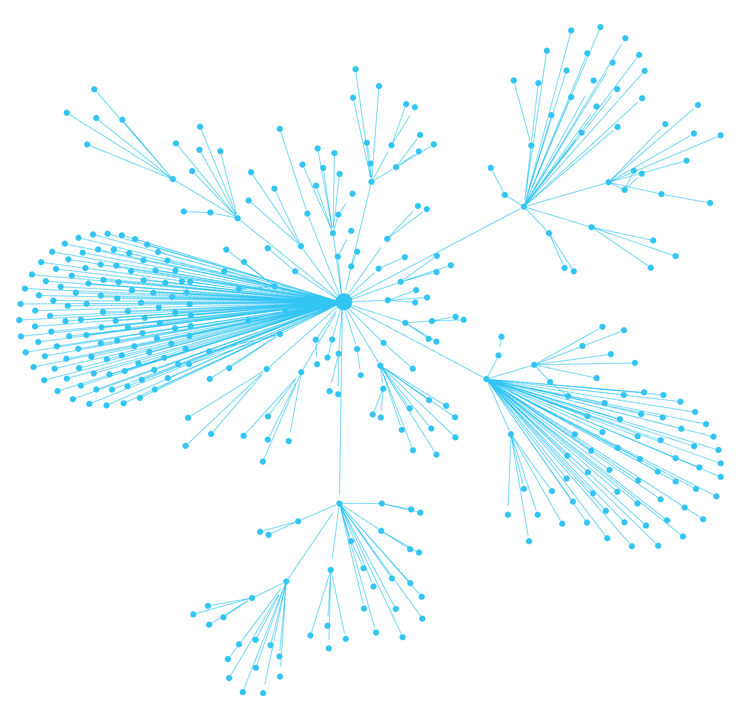
ORG-FIRST MAPPING
Map out all of the entities that you need to protect
COMPLETE DISCOVERY
Discover hosts with high precision across IPv4 and IPv6
CENTRALIZED VISIBILITY
See all assets and exposures across the entire enterprise
PREEMPTIVE RISK MITIGATION
Proactively detect and mitigate risks before adversaries can target them
Own your exposures, surface the truth. Schedule a Demo
Zero-touch deployment, immediate impact
SixMap only needs your organization’s name to begin and starts providing results immediately. The SixMap solution continuously delivers a complete and accurate map of your organization from day one, without pulling your team off their priorities.
See your organization as it truly exists. Schedule a Demo
SixMap Platform Use Cases

Gain a complete and accurate inventory of all external domains and IP addresses.
Accurately evaluate the risk of an organization before an M&A activity.
Trusted by Fortune 500 and Government Agencies
Elwyn Wong
CISO, Ross Stores
“Out of thousands of Internet-facing assets, SixMap was able to automatically pinpoint the most pressing vulnerabilities that required immediate action based on quantifying the risk by correlating the threat actors and exploitable vulnerabilities. We’re glad they have partnered with AWS to deliver value to their customers.”

Own your exposures, surface the truth. Schedule a Demo
Frequently asked questions
SixMap is an agentless SaaS solution. It does not require any installation, downloads, or agents. The product UI can be accessed through any web browser and the data can be ingested via RESTful APIs and webhooks.
SixMap’s discovery procedure has two main components: our unique mapping methodology and 6Gen, our core technology. SixMap’s methodology begins by mapping out an organization’s structure, finding all subsidiaries, holding companies, shell companies, and other legal entities that belong to the parent organization globally. Each of these entities serves as a starting point for the asset discovery process, which uncovers all networks, IP addresses, and domains.
6Gen, SixMap’s computational mapping algorithm, is unique in that it can detect hosts across both the IPv4 and IPv6 address spaces. SixMap uses 6Gen, along with other data sources like WHOIS and DNS records, to provide a complete, accurate, and up-to-date inventory of all your external assets. This discovery process is silent, safe, and non-intrusive.
SixMap’s host discovery and exposure assessment processes are fast, efficient, silent, and completely safe. The SixMap platform does not pose any risk to the confidentiality, integrity, or availability of your organization’s assets. SixMap does not run any intrusive tests or exploit scripts, so there is no activity that might be considered dangerous or risky.
Yes. SixMap offers several RESTful APIs and webhooks that make it easy to ingest the data into any other tools in your environment. All licenses include access to the APIs and webhooks at no additional cost.
SixMap has 3 major differentiators. First, SixMap begins by truly getting to know an organization’s DNA before running technical processes. The organization mapping process identifies all legal entities that belong to a single parent organization, including all subsidiaries, holding companies, etc. On average, we find 5-10x more entities than what’s known to major business intelligence firms.
Second, SixMap’s host discovery process uses 6Gen, a proprietary technology, to uncover all IP addresses and hosts across both the IPv4 and IPv6 spaces. Other tools on the market have very limited discovery capabilities in the IPv6 space, possibly leaving some assets exposed and unmanaged. While many security teams think they do not use IPv6, we almost always find some IPv6 addresses in use.
Third, SixMap’s exposure assessment inspects all 65,535 ports on every host, during every assessment. Most other tools check the top 1,000 to 5,000 most commonly-used ports, which fails to detect exposed services on high ports and creates risk. SixMap finds 7-9% more exposures by assessing all ports, on each host, every single time we run an assessment.
Legacy tools stop at fragments — partial scans, incomplete inventories, and misattributions. SixMap goes further, mapping the entire organization across IPv4 and IPv6, tying every host and exposure back to its rightful entity.
SixMap prices the platform based on the number of full-time employees at your organization, which serves as a proxy for the complexity of your digital infrastructure and the quantity of external assets you need to monitor and protect. It may help to think of a SixMap contract as a “site license,” which covers your entire organization, regardless of the exact number of assets and users.
While some organizations price based on the number of assets, this pricing model may sometimes put customers in a position where they’re incentivized to ignore some of their own assets in order to stay in a lower pricing tier. SixMap prefers a pricing model that encourages customers to protect all of their infrastructure and assets.
See the SixMap Platform in Action
Schedule a time to talk with us and view a demo.
"*" indicates required fields